
For most piston-valve trumpets, start with EcoPro Lite. It's our everyday valve oil. The EcoPro range is 100% plant-based and 100% non-toxic, as confirmed by our manufacturer. If your valves have more play and need a thicker oil, try EcoPro Heavy. A repairer can help you judge the fit, especially on an older instrument. The chart below covers EcoPro and our classic valve oils. Viscosity means how thick an oil is. EcoPro Heavy is thicker than EcoPro Lite. The amount of space between the piston and its casing helps determine which one suits the instrument. If a valve has started sticking, check the cleaning and oiling routine first. Note whether the trouble began after cleaning, an oil change, or a knock. Our sticky-valve guide walks through those checks. We haven't published a numerical viscosity chart for this range. If you're matching a repairer's specification or switching from another brand, send us the instrument model and the oil you've been using. We'll help you choose a starting point. Clean away the old residue using your instrument maker's method, then use one oil consistently for a few practice sessions. That makes it easier to judge how the new oil feels and how often you need to reapply it. Make a note if one valve behaves differently from the others. Details such as "second valve gets slow after twenty minutes" give us something useful to work with. Check which valve mechanism your instrument uses. Piston valves use valve oil. Rotary instruments have separate lubrication points for the rotors, bearings and linkages. See which lubricant goes where for the full guide. Tell us your instrument, current oil and what's happening. Our FAQ explains the viscosity-replacement offer. The trumpet cleaning kit includes EcoPro Lite valve oil. A brass instrument can use several lubricants. The piston or rotor, its bearings and linkages, and the slides each have their own application points. Use your instrument's care instructions to find them, then match the bottle to the job. On a rotary instrument, the rotor turns inside its casing. Bearings support its movement, and the linkage connects it to the lever. Follow the maker's instructions for each oiling point. Rotor oil and bearing/linkage oil have different applications. Heavier oil intended for external moving parts can slow a rotor if it reaches the wrong area. Our protected applicators help you place a small amount where it's needed. Leave rotor disassembly to a repairer unless you've been trained to do it. The French horn kit includes Lite Rotor Oil and tuning-slide grease. Bearing/linkage oil is a separate purchase if the player's routine calls for it. The first and third slides often move while you play to adjust intonation. Trumpet slide oil helps those slides move freely. The main tuning slide and second slide generally use grease to hold their setting. Follow the instrument's instructions for any unusual or trigger-operated arrangement. For the main playing slide, follow the directions on Monster Trombone Slide Cream: apply a couple of drops and work the slide. You can add a water spray if desired. Keep the slide clean using the instrument maker's method. If it continues to drag after normal care, have a repairer check it, particularly after a knock or fall. The tuning slide uses tuning-slide grease. A trombone with a valve attachment also needs the care specified for that valve design. Check the attachment's oil requirements when buying supplies; our trombone kit includes slide cream and tuning-slide grease. Match the lubricant to the part and the way it moves. Monster Slide Grease is for tuning slides that need to hold their setting. EcoPro Trumpet Slide Oil is for the first and third trumpet slides used to adjust pitch while playing. Monster Trombone Slide Cream is for the trombone's long playing slide. Check the product directions and your instrument's care instructions before substituting between these applications. If you used the wrong product, clean it away using the maker's method and apply the specified lubricant. A slide that remains stiff or catches at one point needs a repairer's attention. Note when the trouble started and any recent cleaning, oil change or knock. Those details help narrow down what to check. If the valve is jammed, scraping, or visibly damaged, stop and take the instrument to a repairer. Leave stuck caps, mouthpieces and slides to someone with the right tools. On a school or rental instrument, contact the teacher or rental shop. Work with one piston at a time so each valve stays in its original position. Follow the instrument maker's instructions for removing and refitting it. If you're unsure how the valve guide lines up, ask someone to show you. Wipe the valve clean where practical, apply three or four drops of valve oil around the piston, refit it correctly, and work the valve to distribute the oil. Follow the instrument maker's directions if they specify a different amount. Shake Doc's Juice before use. If you've recently switched oils, clean away the old residue using the approved cleaning method. Use one suitable oil while you check how the instrument responds. EcoPro Lite is our everyday starting point for piston valves. EcoPro Heavy is a thicker option for valves that need it, including those with more play. If normal cleaning and oiling give only brief relief, book a repair assessment. A repairer can check alignment, wear and other mechanical causes of sticking. For the classic range, see the oil-selection chart for Original, Faster, Smoother and Doc's Juice. Rotary instruments have their own lubrication guide. Include the instrument make and model, which valve is affected, the oil you're using, and when the trouble began. Mention any recent cleaning, oil change or impact. It also helps to know whether the problem happens immediately, after playing for a while, or at one point in the valve's travel. Our FAQ explains the viscosity-replacement offer if you need help choosing among our oils.Choosing a valve oil
Valve oils at a glance
Oil
Recommended use
EcoPro Lite
Our everyday choice for most piston-valve players.
EcoPro Heavy
A thicker oil for valves with more play or larger clearances.
Original
Our all-around classic valve oil.
Faster
A classic option for new, closely fitted valves.
Smoother
The heaviest valve oil in our classic range, for worn valves and larger clearances.
Doc's Juice
Fully synthetic valve oil developed with and for Doc Severinsen. Give it a shake before use.
Choosing the thickness
Changing oils
Horns, tubas, euphoniums and rotary trumpets
Need a hand?
Which lubricant goes where
Brass lubricant guide
Part
Monster Oil options
Application
Piston valves
EcoPro Lite or Heavy Valve Oil; Original, Faster, Smoother or Doc's Juice
The piston surface inside its casing. See the valve-oil chart.
Rotors
EcoPro Lite or EcoPro Heavy Rotor Oil; classic Light or Heavy Rotor Oil
Rotor surfaces inside their casings, using the instrument maker's oiling method.
Bearings and linkages
EcoPro Bearing and Linkage Oil or classic Bearing and Linkage Oil
The bearing and linkage points identified in the instrument's care instructions.
Moving first and third trumpet slides
EcoPro Trumpet Slide Oil or classic Trumpet Slide Oil
Slides used to adjust pitch while playing.
Main tuning slide and trumpet second-valve slide
Slide Grease
Tuning slides that need to hold their setting, following the instrument maker's directions.
Trombone playing slide
Trombone Slide Cream
The main hand slide used for playing positions.
Rotor and bearing oil
Trumpet slides
Trombone slides
Can I use one product on every slide?
When a trumpet valve starts sticking
Check the normal oiling routine
Common starting points
What happened
What to check
The problem began after cleaning or reassembly
Check the valve's position and guide alignment against the instrument instructions. Ask for help if the fit is uncertain.
The valve feels dry and improves with oil
Keep up the normal cleaning and oiling routine. Note how long the improvement lasts.
Sluggishness began after switching oils
Clean away the residue and try one oil consistently.
The valve catches at the same point or scrapes
Have a repairer inspect it.
The problem began after a fall or knock
Have the instrument checked before further playing or adjustments.
The valve has noticeable play
Ask a repairer whether a thicker oil would suit its clearance.
Choosing an oil after those checks
What to tell us or the repairer
Free Downloads
Just because we like you. Right Click, 'Save As.'
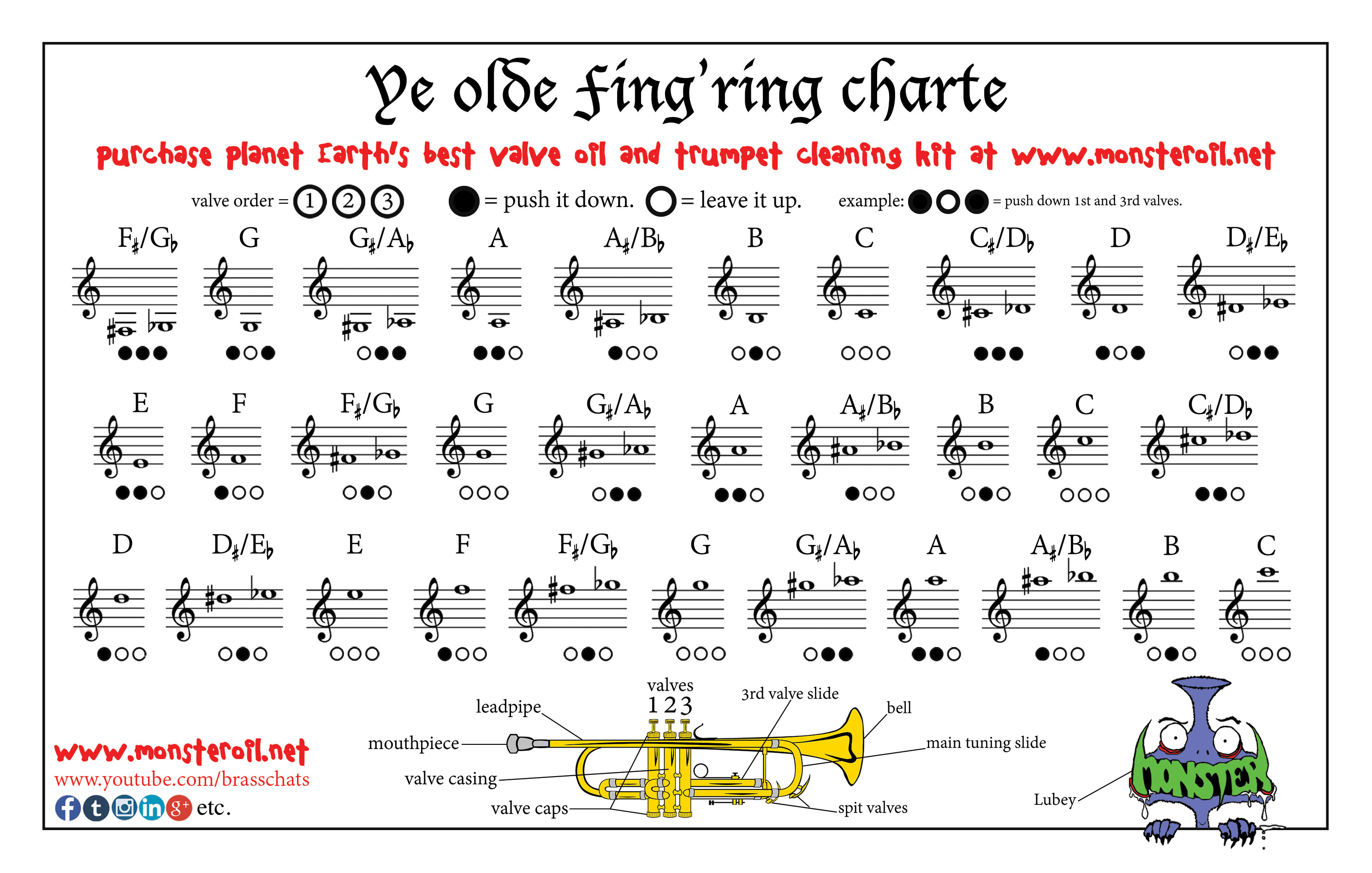
Fingering Chart
How to Clean Your Trumpet

The Monster Oil version (jokes included)
Buy enough Monster Oil to fill your bathtub twice. Submerge your entire horn in the tub. Drain the valve oil and wash the instrument. Refill the tub again and submerge your horn. Drain the valve oil from the tub and you are done!
If for some reason you do not have a suitable tub, then send a note along with YOUR ORDER and we will be glad to provide alternative methods for lubricating your instrument.
As for your slides, simply take a handful of grease (you'll probably need 6-8 tubs to get a big handful) and rub it on all of your doorknobs so people stop breaking in while you're trying to focus on instrument lubrication. Now that you have some peace and quiet, take out another tub, and coat each of your slides with the grease.
If your residence uses some type of switch or other non-doorknob entry then send a note along with YOUR ORDER and we will be glad to provide alternative methods for lubricating your slides.