Mouthpieces
Choosing a Lube Master mouthpiece
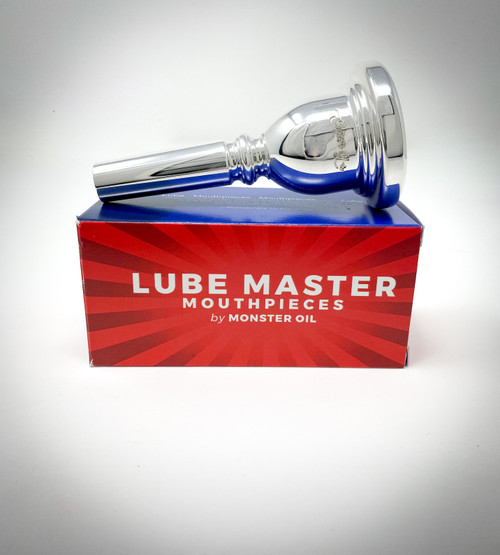
Start with the mouthpiece you play now: how the rim feels, the sound you get, and where you want something different. Our Lube Master range includes six trumpet models and the Super G for tuba.
Trumpet models
| Model | Design | A starting point for |
|---|---|---|
| Lube Master One | Our orchestral model, developed from selected Mt. Vernon designs. | Players using mouthpieces around the Bach 1C, 1¼C or 1½C range. |
| Lube Master Three | Developed from a scanned Mt. Vernon 3C; it plays like a large 3C. | Players who like a roomy 3C feel, including those accustomed to sizes around 1¼C through 3C. |
| Lube Master Lead | West Coast-style design with a wide rim diameter, shallow cup and traditional Bach-style blank. | Lead players who prefer a shallow cup with a wider rim diameter. |
| Clocker One | Uses the Lube Master One specifications, with an additional hole in the side of the cup. | Players interested in the One who also want to experiment with mouthpiece rotation. |
| Clocker Three | Uses the Lube Master Three specifications, with an additional hole in the side of the cup. | Players interested in the Three and the Clocker design. |
| Clocker Scream | 16.54 mm inner diameter, shallow cup, small throat and narrow backbore, plus the Clocker hole. | Lead players looking for a smaller inner diameter and shallow cup. |
The Bach sizes above give you a familiar reference point. Rim shape, cup shape and the way a mouthpiece works with your trumpet all affect the feel.
What shank do your trumpet mouthpieces use?
All Monster Oil trumpet mouthpieces use the same Bach-style trumpet shank.
One or Three?
If you usually play a 1C-size mouthpiece for orchestral work, start by looking at the One. If you like a large 3C, look at the Three. The suggested size ranges overlap, so include both in a playing comparison if you can.
Play the same familiar music on each. Include soft entrances, slurs, articulation and passages across your usual range. Pay attention to comfort and response as well as sound. A teacher or another player listening out front can help with the comparison.
Trying a Clocker
Clocking means rotating the mouthpiece in the receiver. The extra hole in a Clocker's cup makes that position part of the setup. Try different orientations while playing the same short passage, and listen for the position that works best for you.
The Clocker One page includes our mouthpiece-clocking video. Each player finds their own position.
Super G for tuba
The Lube Master Super G follows the Conn Geib tradition through selected examples of Scott Laskey's Geib design. We updated the rim for comfort.
Choose American or European shank to suit your tuba's receiver. If you are unsure which fits, check with your instrument maker or repairer before ordering.
The Lip Cam
TLC—The Lip Cam is a playable trumpet mouthpiece with a built-in camera for watching your lips as you play. The current models are TLC One and TLC Three. The getting-started guide covers the camera setup and includes teaching videos.